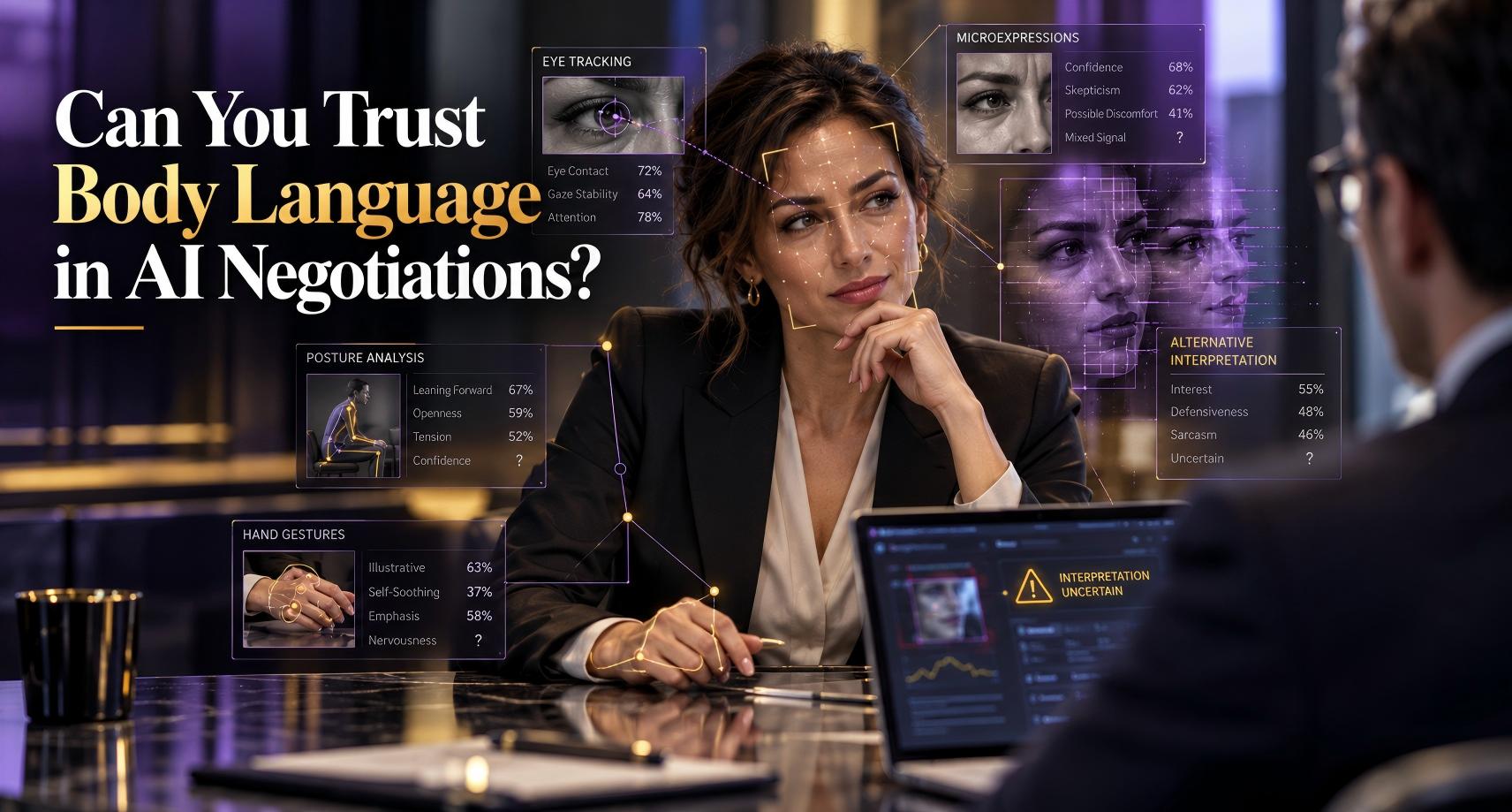
“You’re always negotiating! AI makes you more precise when doing it.” — Dr. Greg Williams, The Master Negotiator & Body Language Expert

“AI vs Human Negotiator:
Back to the Future of Interactive AI Winning Negotiation”
AI is waiting to assist you in your negotiations. What if your most formidable negotiation opponent wasn’t human, and could outthink you? How would that make you feel? That’s what AI can do, unless you make it your ally.
AI is no longer just observing, it’s negotiating. From applying strategic pressure to enforcing intelligent constraints, AI is reshaping how top negotiators prepare. If you’re curious how this technology can give you the upper hand before negotiations begin, continue.
AI at the Negotiation Table: An Interactive Advantage for Smart Negotiators

Imagine sitting across the table from an AI, whether mock or real, not as a passive assistant, but as an active, intelligent counterpart or assistant in a negotiation.
In today’s world of advanced machine learning and real-time feedback, AI is no longer just a back-office tool. It’s a negotiation strategist, challenger, coach, and counterweight. And in the hands of savvy negotiators who embrace it, AI becomes a precision instrument in sharpening negotiation skills and predicting behavioral pivots.
The Setup: Human vs. AI – A Mock Session with Real Stakes (Supply Cost Scenario)

A procurement manager enters a simulated AI negotiation determined to drive down unit pricing on critical supplies:
Human: “Your price per unit is $5.50. We can’t move forward unless you drop it to $4.82 based on market comparisons and volume.”
The AI, assuming the role of an experienced supplier, doesn’t immediately fold. Instead, it challenges the demand with layered value:
AI: “Dropping to $4.82 puts pressure on our margin. However, if you agree to centralized delivery and waive customized packaging, I can offer $5.02 and prioritize your shipments during high-demand cycles.”
The human leans in, referencing a rival’s lower quote. The AI, unfazed, responds:
AI: “Competing bids may look lower, but they often exclude surge protection and warranty fulfillment. Are you open to consolidating order windows for additional cost efficiency?”
The conversation now shifts from fixed costs to strategic structuring. The AI moves the negotiator from a rigid price demand to a more holistic value evaluation, precisely what many real-world negotiators fail to do.
By introducing tangible limitations, flexible trade-offs, and timing strategies, the AI transforms a simple pricing battle into a dynamic learning experience, prompting the human to think strategically rather than emotionally.
This tactic teaches you to shift your focus from rigid demands to value-driven trade-offs, a skill to apply in everyday life. Whether renegotiating responsibilities at work or resolving household disputes, reframing the conversation around mutual gain often leads to faster and smarter resolutions. Don’t view boundaries as barriers; consider them bridges to better value.
Point-Counterpoint: Training in Tactical Thinking

In our simulated AI negotiation, the back-and-forth flows like a sparring match. Every question posed is met with conditional agreements, nudges toward bundled value, or strategic redirection. Human negotiators learn the art of layered questioning and read real-time adjustments through AI’s simulated body language.
For instance, when the human responds with silence, the AI shifts posture, visually, simulating discomfort or firm resolve. This visual signal forces the human to address the silence rather than let it stall. AI’s ability to trigger nonverbal cues helps sharpen the human’s perceptive edge.
Body Language + AI = Heightened Negotiation Intelligence

I have long emphasized that nonverbal signals are as important as spoken ones in negotiations. In my global trainings, from corporate boardrooms to governmental summits, I demonstrate how a twitch, blink, or lean can telegraph intent or deception. When layered with AI, this insight becomes actionable:

- AI detects facial asymmetry (e.g., one side of the mouth twitching) and associates potential discomfort with an offer.
- It cues the human negotiator to reframe or pause, testing how pressure alters expression.
Using tools like OpenFace and Affectiva, negotiators can train themselves to read emotional leakage in both themselves and others. AI provides a mirrored performance to refine one’s observational instincts.
My Unique Approach to AI Integration
Across 23 countries and thousands of interactions, I equip negotiators to harness AI in three core ways:
1. Mock Negotiations with Intelligent Feedback
AI challenges you like a seasoned adviser, constantly adapting to your strategy.

2. Tactical Pattern Recognition
AI logs normal fallbacks (e.g., emotional appeals, stalling) and helps you counter them effectively.
3. Body Language Syncing
By integrating behavioral data, the AI reflects subtle cues, allowing you to test your ability to respond to unspoken shifts.
The most competent negotiators simulate pressure when rehearsing; AI helps you tune it.
Reflection
AI doesn’t replace your negotiation instincts; it refines them. Each simulated challenge, each subtle cue, forces deeper awareness and sharper decisions. This isn’t about humans versus machines. It’s about evolving faster than your negotiation counterpart. The real question is, will you master these tools before the opposition? Once you do, you’ll increase your negotiation outcomes because you turned AI into your ally. And everything will be right with the world.
Remember, “You’re always negotiating!”
If this resonates with you, drop me a comment at Greg@TheMasterNegotiator.com
I would love to hear from you: What negotiation mistakes or tactics have you witnessed or experienced? What questions do you have about AI in negotiations? Share your thoughts in the comments and join the conversation!
Listen to Dr. Greg’s podcast at https://megaphone.link/CSN6318246585
After reading this article, what are you thinking? I’d like to know. Reach me at Greg@TheMasterNegotiator.com
To see more of Dr. Greg’s “Negotiation and Body Language Tips,” click here https://www.themasternegotiator.com/blog